Our top picks
City water
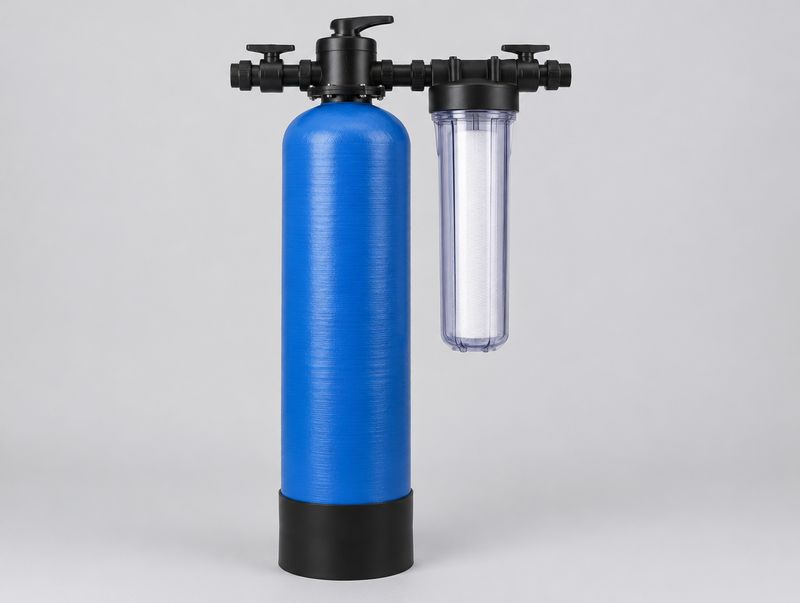
SpringWell CF1
1–3 bathroom homes on chlorinated water
- 9 GPM
- ~$40/year in pre-filters
- 1M-gallon media
~$1,160 at time of writing
Well water
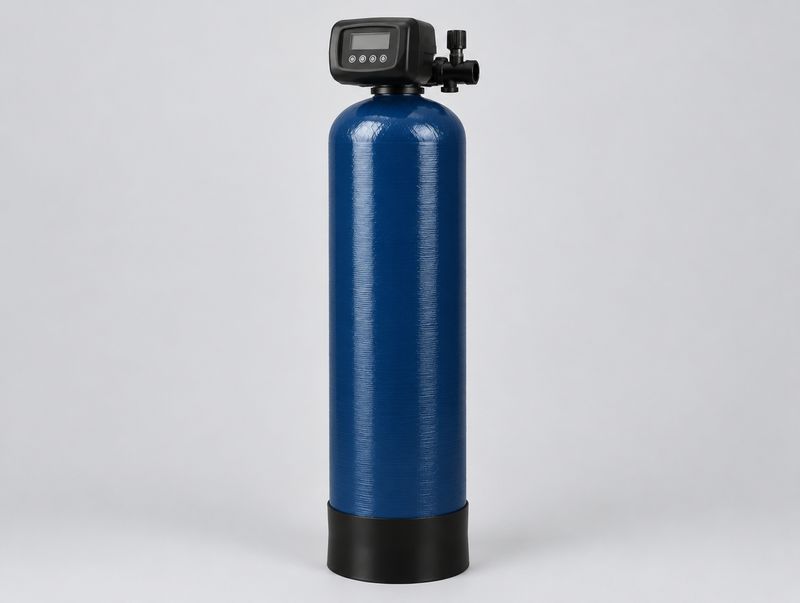
SpringWell WS
Moderate iron, manganese, sulfur
- Iron 7 ppm · H2S 8 ppm
- Self-backwashing
~$2,200 at time of writing
Verdict: SpringWell CF1 and WS
Best for: Homeowners who want a set-and-forget tank system with low running costs, on city water (CF1) or wells with moderate iron and sulfur (WS).
Pros
- Low running cost: CF1 pre-filters run about $40 a year
- Large media tank rated for 1,000,000 gallons (CF1)
- WS rated for 7 ppm iron, 1 ppm manganese, 8 ppm hydrogen sulfide
- Lifetime warranty and 6-month money-back guarantee advertised
- Little to no pressure loss reported when sized correctly
Cons
- No NSF, IAPMO or WQA performance listing found for the CF1
- Returns reportedly carry a 25% restocking fee plus shipping
- WS install is involved; many will want a plumber
- WS ratings are lower than heavy-duty peroxide systems
The SpringWell whole house water filter line is one of the most recommended on the web, so we wanted to look past the praise. In this review we cover the two models most homes consider: the CF1 for city water and the WS series for wells. We also flag the catches most reviews skip, including certification and return terms.
SpringWell at a glance
| CF1 (city water) | WS (well water) | |
|---|---|---|
| Treats | Chlorine, chloramine, taste and odor | Iron, manganese, hydrogen sulfide |
| Technology | Sediment pre-filter + catalytic carbon/KDF tank | Air injection oxidation, self-backwashing |
| Flow / home size | 9 GPM, 1–3 bathrooms | Sized models, roughly 12–20 GPM |
| Rated capacity | ~1,000,000 gallons (media) | Iron 7 ppm, manganese 1 ppm, H2S 8 ppm |
| Typical price* | ~$1,160–$1,365 | ~$2,200 |
| Running cost | ~$40/year in pre-filters | Low; periodic backwash, occasional media |
*Prices seen August to October 2026. Check the current price before buying.
SpringWell CF1 for city water
The CF1 is a point-of-entry tank system aimed at municipal water. A 5-micron sediment pre-filter catches particles first. Then a large tank of catalytic carbon and KDF media reduces chlorine and chloramine, which are the main causes of “pool smell” in city water.
Performance. In hands-on testing by Water Filter Guru in a two-bathroom home, the CF1 had no noticeable effect on flow rate or water pressure. That matches what we would expect from a 9 GPM system in a home that size.
Maintenance. This is the CF1’s biggest strength. The main media is rated for about a million gallons. Therefore, the only routine job is swapping the sediment pre-filter roughly every six months, at about $40 a year.
Price. We saw it at about $1,160 against a list price of $1,365. Prices move with promotions, so compare before you buy.
SpringWell WS for well water
The WS series tackles the classic well-water trio: iron, manganese and hydrogen sulfide. It injects air into the top of the tank to oxidize those contaminants, then traps them in the media. A scheduled backwash flushes them out.
SpringWell rates it for 7 ppm iron, 1 ppm manganese and 8 ppm hydrogen sulfide. In independent testing, iron dropped from 2.37 ppm to zero, while manganese rose slightly in that test. In other words, it handled iron well, and retesting after installation is worth doing.
Installation is more involved than the CF1. That is because the WS needs a drain line and power for the control valve. For a well with heavier sulfur, compare it with peroxide systems in our guide to the best whole house water filter for well water.
The catches: certification and returns
Certification. SpringWell markets reduction of chlorine, chloramine and PFAS. It also says it uses NSF-certified components. However, component certification only shows the materials are safe. It does not prove contaminant reduction. An independent directory check by TapWaterData found no NSF, IAPMO or WQA performance listing for the CF1 as of August 2026. If certified reduction matters to you, especially for PFAS, ask SpringWell for certificate numbers and verify them on the NSF listings.
Returns. SpringWell advertises a 6-month money-back guarantee and a lifetime warranty. Yet independent reviewers report that returns carry a 25% restocking fee plus return shipping. On a $2,200 system, that could cost over $500, so get the terms in writing before ordering.
SpringWell whole house water filter vs the alternatives
How does SpringWell compare with its main rivals? Here is the short version.
Against Aquasana Rhino (city water), SpringWell’s CF1 uses a single large tank, while Aquasana’s Rhino line also targets city water with carbon and KDF media. Both suit a 1–3 bathroom home. As a result, the choice often comes down to current pricing, warranty terms and which certifications each brand can document. We will publish a full SpringWell vs Aquasana comparison soon.
Against US Water Systems Matrixx (well water), the gap is about strength. SpringWell’s WS uses air injection and is rated to 8 ppm hydrogen sulfide. By contrast, the Matrixx uses peroxide injection rated to 30 ppm. So for mild to moderate sulfur, the WS is simpler and cheaper to run. For a strong rotten-egg smell, however, the Matrixx is built for the job.
Against a basic cartridge setup, SpringWell costs far more upfront. On the other hand, big-blue cartridge housings need frequent filter swaps, and their small media volume means shorter contact time. Over five or more years, a tank system often costs less to run.
Is the SpringWell whole house water filter worth it?
Overall, the SpringWell whole house water filter is worth it for the right home. Here is who that is.
Buy the CF1 if you are on city water, want better-tasting water at every tap, and value low running costs over certified contaminant claims.
Buy the WS if your well test shows iron, manganese or sulfur within its rated limits, and you are comfortable with a more involved install.
Skip SpringWell if you need certified PFAS or lead reduction (look at certified point-of-use systems instead), if your sulfur or iron exceeds the WS ratings, or if the restocking fee is a deal-breaker.
Not sure which camp you are in? Start with our guide on how to choose a whole house water filter.
Decided SpringWell fits your water?
Prices and promotions change often. Check today’s price, and get the return terms in writing before you order.
Frequently asked questions
Is SpringWell NSF certified?
SpringWell says its systems use NSF-certified components. However, component certification is not the same as performance certification for reducing specific contaminants. As of August 2026, an independent directory check found no NSF, IAPMO or WQA performance listing for the CF1. Ask SpringWell for certificate numbers and verify them on nsf.org.
How long does a SpringWell whole house filter last?
The CF1's main media tank is rated for about 1,000,000 gallons, which is many years for a typical household. The 5-micron sediment pre-filter is replaced about every 6 months.
Does SpringWell reduce water pressure?
When sized for your home, reviewers report little to no pressure loss. The CF1 is rated at 9 GPM for 1–3 bathroom homes; larger homes should choose a bigger model.
Is the SpringWell CF1 good for well water?
No. The CF1 is designed for treated city water. Wells with iron, manganese or sulfur need the WS series, and wells with bacteria also need UV disinfection.
What is SpringWell's return policy?
SpringWell advertises a 6-month money-back guarantee. Independent reviewers report that returns carry a 25% restocking fee and return shipping costs, so confirm the terms in writing before you buy.