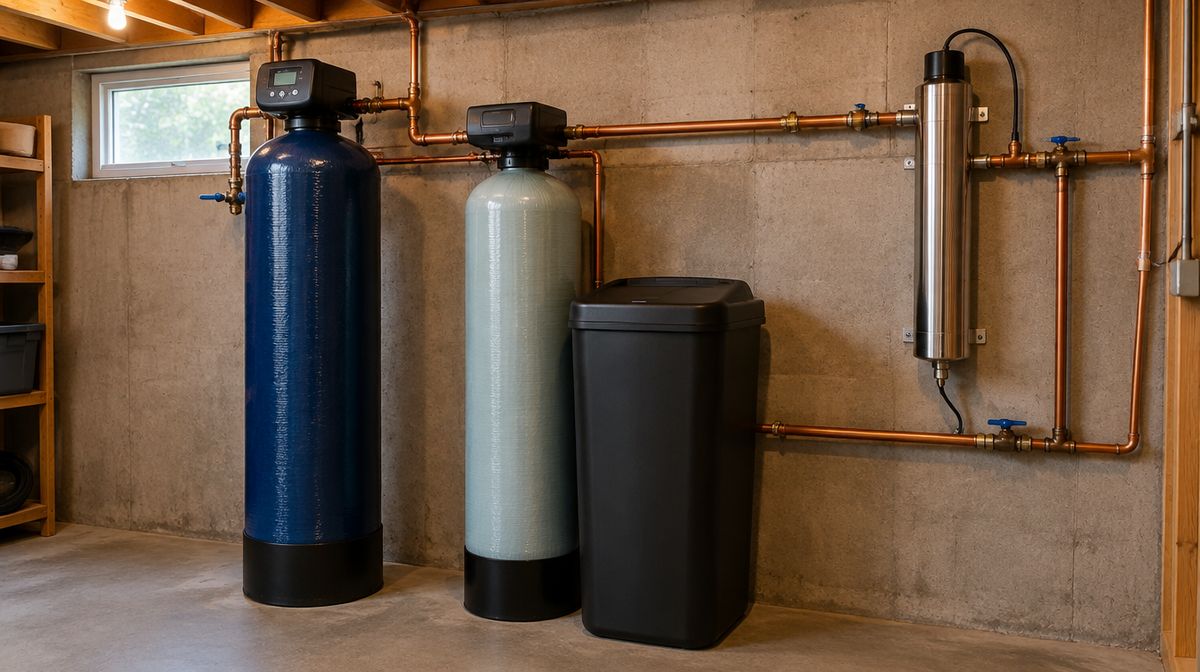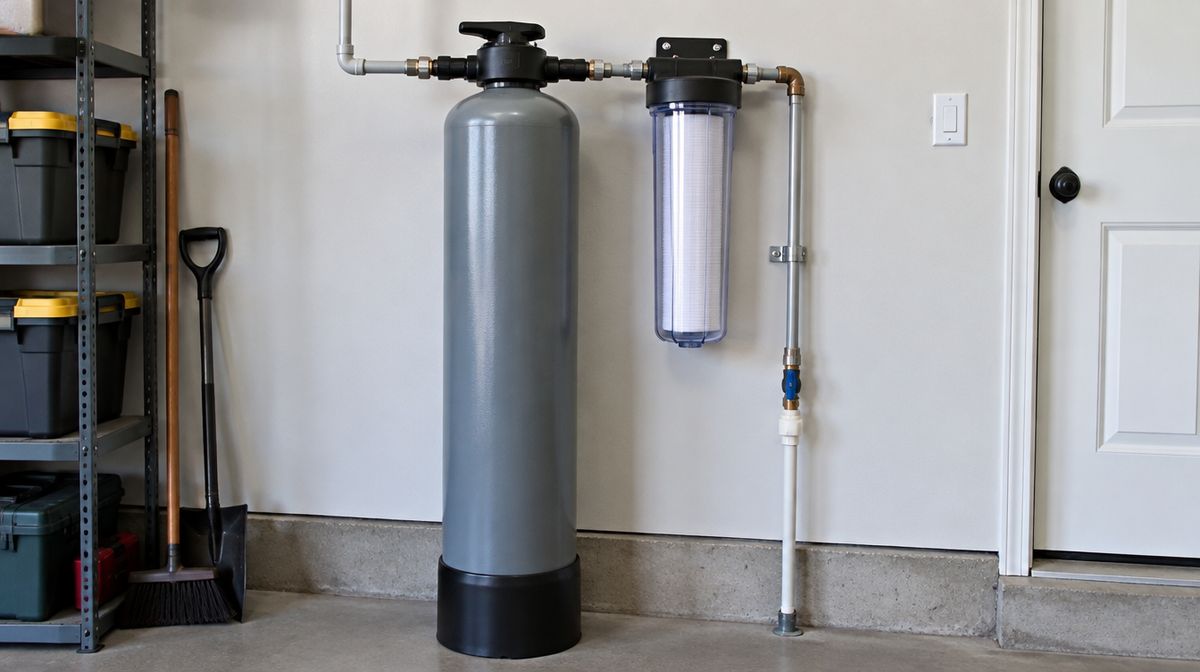
Our top picks
Most homes
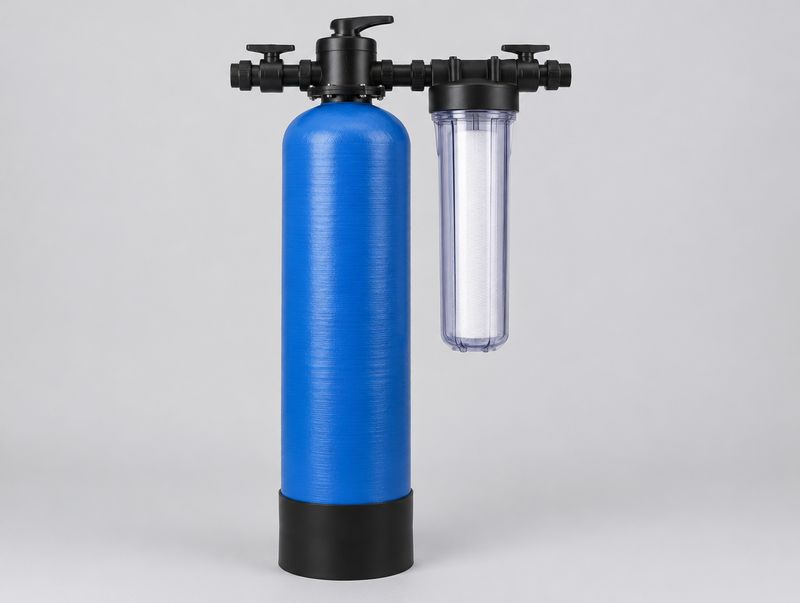
On city water?
Chlorine or chloramine taste, light sediment.
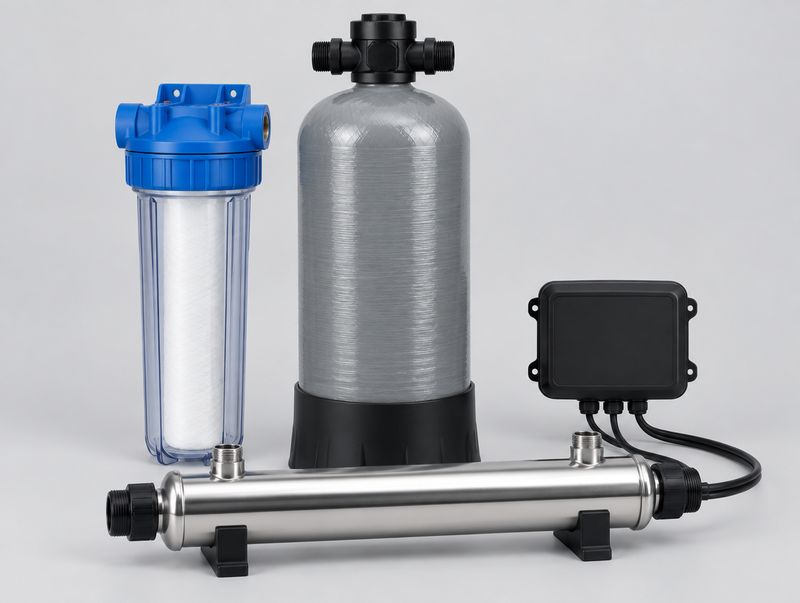
- Carbon/KDF tank + sediment pre-filter
- Low running costs
Well owners
On a private well?
Iron, sulfur smell, hardness or bacteria.
- Oxidation filter for iron and sulfur
- UV for bacteria
If you want to choose a whole house water filter that actually fixes your water, start with one rule: match the system to your water test, not to a sales page. A carbon filter that is perfect for city chlorine will do little for a well with iron and sulfur. On the other hand, an iron filter is wasted money on treated city water.
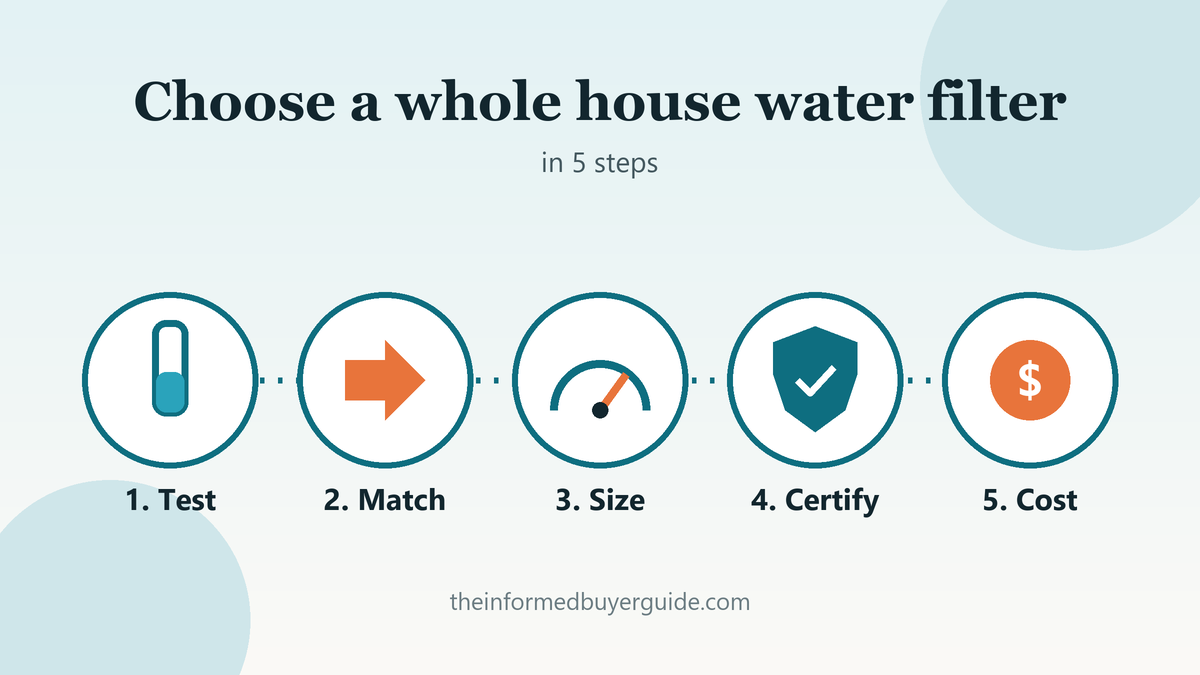
This guide walks through the five steps we use ourselves. It takes about 15 minutes to read, and it can save you from a $2,000 mistake.
Step 1: Find out what is in your water
Everything else depends on this step. Fortunately, it is cheap and easy.
If you are on city water, your utility must publish an annual water quality report, called a Consumer Confidence Report. Search your utility’s name plus “water quality report”, or start at the EPA’s CCR page. Look for the disinfectant used (chlorine or chloramine), hardness, and any contaminants listed near their legal limits.
If you are on a private well, nobody tests it but you. Health agencies such as the Wisconsin DNR advise testing at least once a year for bacteria and nitrate. Also test when the water changes taste, color or smell, or after flooding or well repairs. For a whole-house decision, order a broader panel from a certified lab that includes iron, manganese, hardness, pH, hydrogen sulfide and total dissolved solids.
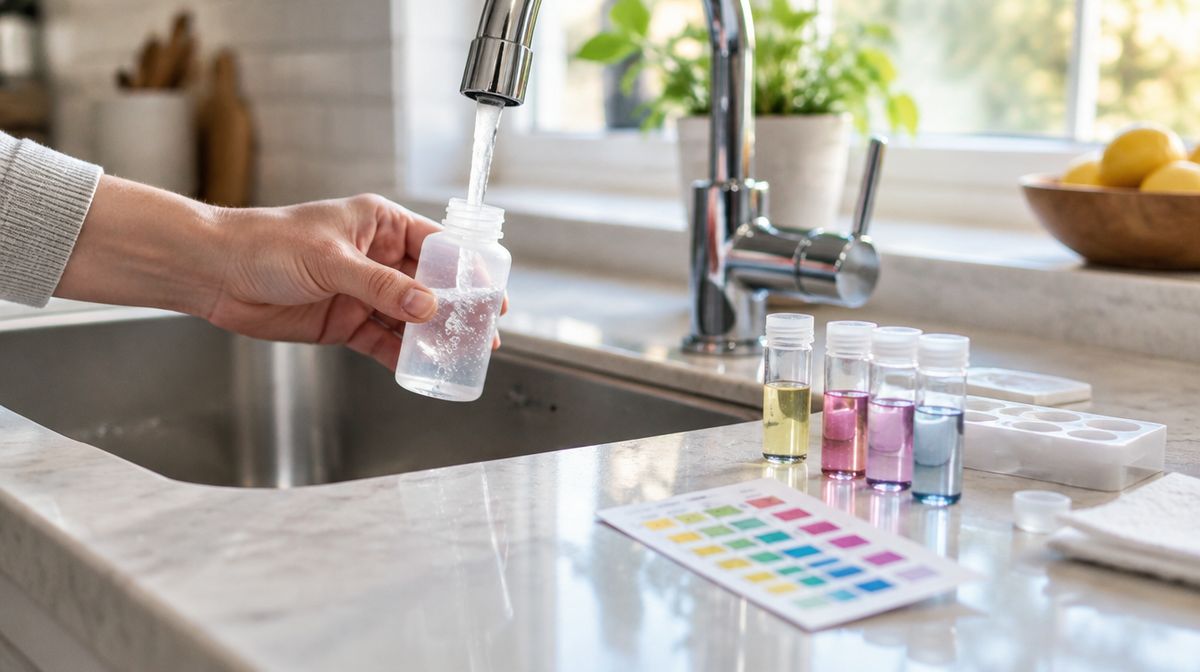
Test strips are fine for a quick look. Still, before you choose a whole house water filter, a certified lab test is worth the extra cost before you spend thousands on equipment.
Step 2: Match the treatment to the problem
Most whole-house setups combine two or three stages. Next, use this table to map what your test found to the right technology.
| What your test or senses show | What usually fixes it |
|---|---|
| Chlorine or chloramine taste and smell (city water) | Catalytic carbon, often with KDF media |
| Sand, silt, rust particles | Sediment pre-filter (spin-down or cartridge) |
| Hard water: scale, spots, dry skin | Water softener or salt-free conditioner |
| Iron, manganese: orange or black staining | Oxidation filter (air injection or peroxide injection) |
| Rotten-egg smell (hydrogen sulfide) | Oxidation filter; heavy levels may need peroxide injection |
| Bacteria (positive coliform test) | UV purifier, after sediment and iron are removed |
| PFAS or lead at the drinking tap | Certified point-of-use filter or reverse osmosis |
Two points trip people up. First, filters do not soften water, so hard water needs its own stage. Second, UV only works on clear water, so iron and sediment must be removed before the UV lamp.
Step 3: Size it for your household’s peak flow
A whole house water filter must keep up when several taps run at once. The key number is the service flow rate in gallons per minute (GPM).
As a rough guide, most 2–3 bathroom homes peak at about 8–12 GPM. Larger homes with four or more bathrooms can need 12–20 GPM. Your pipes matter too: a 3/4-inch line typically carries less than a 1-inch line. Therefore, buying a filter rated far above your pipe size gains little.
For example, a simple way to size is to add up the fixtures you might run together, such as two showers, a washing machine and a dishwasher. Then pick a system rated at least 10–20% above that total.
Step 4: Check certifications, not just claims
Residential water filters are not federally regulated, so claims vary widely. Independent standards fill that gap. According to NSF, the most common ones are:
- NSF/ANSI 42: aesthetic effects such as chlorine taste and odor.
- NSF/ANSI 53: health-related contaminants such as lead or certain PFAS.
- NSF/ANSI 55: UV systems for microbiological treatment.
- NSF/ANSI 401: emerging contaminants such as some pharmaceuticals.
Certification is specific to each contaminant. A system certified for chlorine is not automatically certified for lead. Also note the difference between component certification (the tank or cartridge material is safe) and performance certification (the system was proven to reduce a contaminant). Ask brands for the certificate number and look it up yourself.
Step 5: Count the full cost of ownership
The price on the product page is only the start. Before you buy, add up:
- Installation: many systems are DIY-friendly, but well systems with drains and electrical needs often need a plumber.
- Replacement filters and media: sediment cartridges are cheap but frequent; tank media lasts years.
- Running costs: salt for softeners, electricity and yearly lamps for UV.
- Return terms: some brands charge restocking fees or return shipping, even within a “money-back” window.
For example, a tank-style carbon system for city water often costs around $40 a year in pre-filters, while a well system with a softener and UV costs far more to run.
City water vs well water at a glance
| City water | Private well | |
|---|---|---|
| Typical main problem | Chlorine or chloramine taste, some sediment | Iron, manganese, sulfur, hardness, bacteria |
| Typical setup | Sediment pre-filter + carbon/KDF | Sediment + oxidation filter + softener + UV |
| Where to get data | Utility’s annual water report | Certified lab test, at least yearly |
| Typical budget | Lower | Higher, with more maintenance |
Common mistakes when you choose a whole house water filter
Most bad purchases come from skipping one of the five steps above. In particular, watch for these:
- Buying before testing, then discovering the system does not treat your actual problem.
- Choosing by price alone and ending up with an undersized system and weak showers.
- Expecting a filter to fix hard water.
- Putting UV before iron removal, which lets stains coat the lamp sleeve.
- Trusting “removes 99%” claims without a certificate for that contaminant.
What to read next
In short, the best way to choose a whole house water filter is to let your water test make the first decision for you. After that, flow rate, certifications and running costs narrow the field quickly.
On a private well? Our guide to the best whole house water filter for well water compares systems by the problem they solve. Considering a popular brand? Read our SpringWell whole house water filter review for the specs, costs and catches.
Know your water? See the systems that fit it.
On a private well, compare systems by the problem they solve: iron, sulfur or bacteria.
Frequently asked questions
Are whole house water filters worth it?
They are worth it when your water has a whole-house problem, such as chlorine taste in every tap, sediment, iron staining or sulfur smell. If your only concern is drinking water, a certified under-sink or reverse osmosis filter at the kitchen tap is usually cheaper and more targeted.
Does a whole house water filter reduce water pressure?
A correctly sized system typically causes only a small pressure drop. Problems appear when the system's flow rate is lower than your household's peak demand, or when too many stages are stacked in a row. Size for your peak flow and replace clogged sediment filters on schedule.
Does a whole house water filter soften water?
No. Filters remove contaminants, but hardness minerals (calcium and magnesium) need a water softener or a salt-free conditioner. Many homes, especially on well water, use a filter and a softener together.
How often do you change a whole house water filter?
It depends on the design. Sediment pre-filters are often changed every 3 to 6 months, while large tank-style carbon systems can last hundreds of thousands to a million gallons. Check the manufacturer's rated capacity against your household's water use.
Can a whole house filter remove PFAS or lead?
Some can reduce them, but certification for those specific contaminants matters. For PFAS and lead in drinking water, a point-of-use system certified to NSF/ANSI 53 or 58 for that contaminant is often the most reliable and affordable fix.